“Deakin University offers the world’s first campus-based Forest Therapy experience. As a clinical psychologist and academic, I have been interested in how complementary and alternative approaches can work alongside psychological treatments to improve their benefits for people suffering mental ill-health.” Melissa O’Shea, Associate Professor of Clinical Psychology, living and working on Wadawurrung Country. Project Lead
“In particular, I have an interest in mind-body approaches, including yoga. In 2018 I completed a 500 hour yoga teacher training course, which inspired me personally and professionally to explore the mental health benefits of yoga and other mindfulness -based approaches.
“Importantly, we know that there are many benefits of cultivating mindfulness for mental health and overall well-being. Mindfulness refers to the ability to be fully present in the current moment and to apply a compassionate disposition to whatever is arising in the now.
“This is a skill to be cultivated as there are so many distractions for the mind! Even our own thoughts can take us away from engaging in the present moment – such as ruminating about what might have happened in the past or worrying about the future.
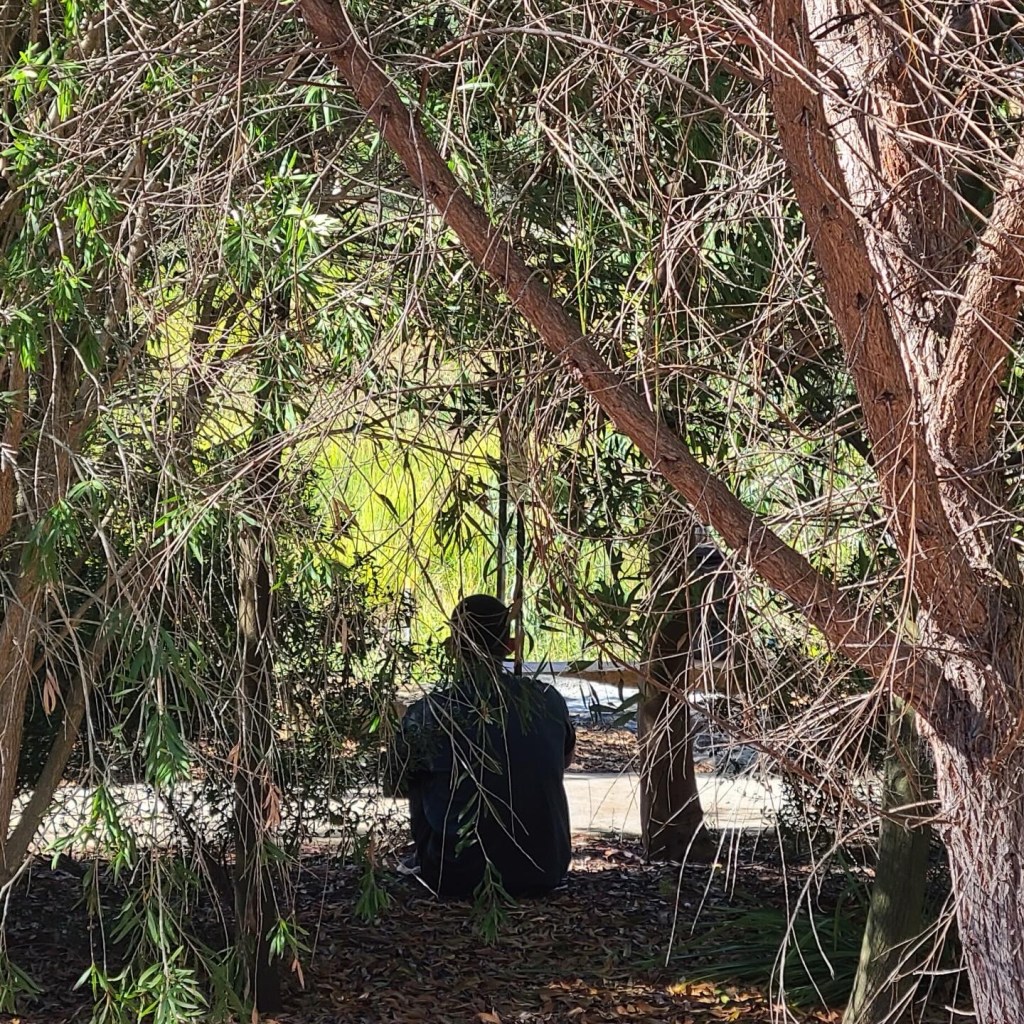
“This work serendipitously led me to connect with Forest Therapy, which is a nature-based mindfulness approach and like yoga, may be particularly supportive for cultivating a more mindful disposition. Forest Therapy emerged from Japan, where it is known as shinrin-yoku (or forest bathing). The practice encourages people to walk slowly and with intention in wild natural spaces including forests and to take in nature with all the senses. The practice includes a range of nature-based interventions such as mindfulness and gentle movement.
“Like yoga, Forest Therapy is a practice that has a number of physical and psychological benefits. Also, research has shown that movement- and nature-based mindfulness practices may be more accessible to people than other forms of mindfulness, such as seated meditations.
“I have been very fortunate to have been able to support the introduction of Forest Therapy to Deakin University, where we hope students and staff will begin to appreciate the benefits of this restorative practice. Via Deakin’s partnership with the International Nature and Forest Therapy Alliance and through the combined efforts of our Sustainability and Campus grounds team, the first INFTA certified trail on a university campus in the world has been delivered! Located at the Waurn Ponds campus and taking advantage of it’s stunning wetlands development and other natural resources, the trail offers the opportunity for guided and self-guided Forest therapy activities.

“Along with the health benefits that Forest Therapy offers to students and staff on campus, the project is an important one for Deakin’s commitments to Sustainability. Not only does the development of the trail, nurture and preserve a natural space on campus, we know that when people engage in pleasurable activities in nature, they become more connected to nature. What we connect with, we care for – and thus supporting environmental action and conservation.
“I am extremely proud to be part of this project and look forward to students and staff having the opportunity to engage with the beautiful practice of Forest Therapy in their own backyard.” Contact deakinft@deakin.edu.au
Melissa O’Shea, Associate Professor of Clinical Psychology, living and working on Wadawurrung Country. Project Lead.
Photos: Susan V. Joachim, President International Nature and Forest Therapy Alliance (INFTA) Melbourne
 HuG
HuG 